Map the movement
Mark where people walk, where chairs slide, where pets nap, and where doors need clearance. The right rug supports movement before it decorates the room.
Home Ideas
Use this page as a planning guide for approachable room updates. The structure moves from first impressions to practical styling choices, then into simple checkpoints that help you choose color, size, pad feel, and placement. The goal is a home that looks more pulled together while still making space for shoes by the door, breakfast at the counter, weekend guests, pets on the sofa, and the ordinary rhythm of family life.
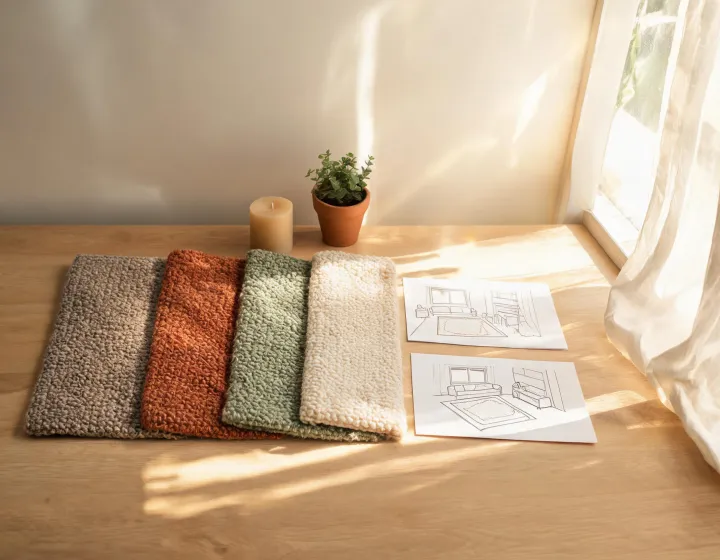
Room Refresh Path
Many shoppers begin with a pattern they like, then discover that size, lighting, furniture legs, and care routines matter just as much. This planning sequence keeps the process grounded. You can use it for one rug or for several connected spaces that need to feel related without becoming identical.
Mark where people walk, where chairs slide, where pets nap, and where doors need clearance. The right rug supports movement before it decorates the room.
Decide whether the room needs calm texture, a vintage focal point, a warm border, or a playful print that gives neutral furniture more personality.
Think about how often the space collects crumbs, soil, water, or pet hair. Easy-care choices are more satisfying when they match the actual household rhythm.
Repeat color temperature, not necessarily the same pattern. A sage runner, clay entry rug, and ivory area rug can belong together without copying one another.
A lighter ground with a soft border can open a compact bedroom or apartment living area. Keep furniture front legs on the rug when possible, and avoid patterns so large that the motif disappears under the sofa.
Best for: bedrooms, studios, reading cornersFor kitchens, entries, and hallways, pattern density can be a quiet helper. Faded motifs and mixed neutrals disguise small marks until wash day, while low profiles help the rug stay practical.
Best for: runners, mudrooms, vanitiesOutdoor seating looks more intentional when the rug repeats a color from cushions, planters, or interior textiles near the door. This makes the threshold feel designed instead of accidental.
Best for: covered patios, balconies, garden roomsStyle Pairings
A rug rarely works alone. It responds to the nearby materials: wood tone, wall color, towel texture, ceramic glaze, metal finish, outdoor furniture weave, and the softness of curtains or bedding. These pairings help a room look layered while keeping the maintenance story simple.
Honey, oak, and walnut tones pair beautifully with faded clay, antique ivory, and warm taupe rugs.
Plants, painted cabinets, and outdoor cushions give sage-backed patterns a natural place to land.
Baths and kitchens with stone or tile feel more relaxed with low-contrast motifs underfoot.
Rattan, wicker, and patio frames work well with textured outdoor rug patterns that feel casual but finished.
Keep the planning simple: size, palette, use, and care. When those four answers are clear, the right pattern becomes much easier to recognize.
Build A Better Shortlist
Share the furniture, the traffic, the colors, and the messiest moments. We will help translate them into rug options that feel warm and realistic.
Request Ideas